The Rich History of Persian Tea
From Silk Road to Modern Iran
Discover how tea became an integral part of Iranian culture, tracing its path through centuries of trade, innovation, and tradition.
Explore More →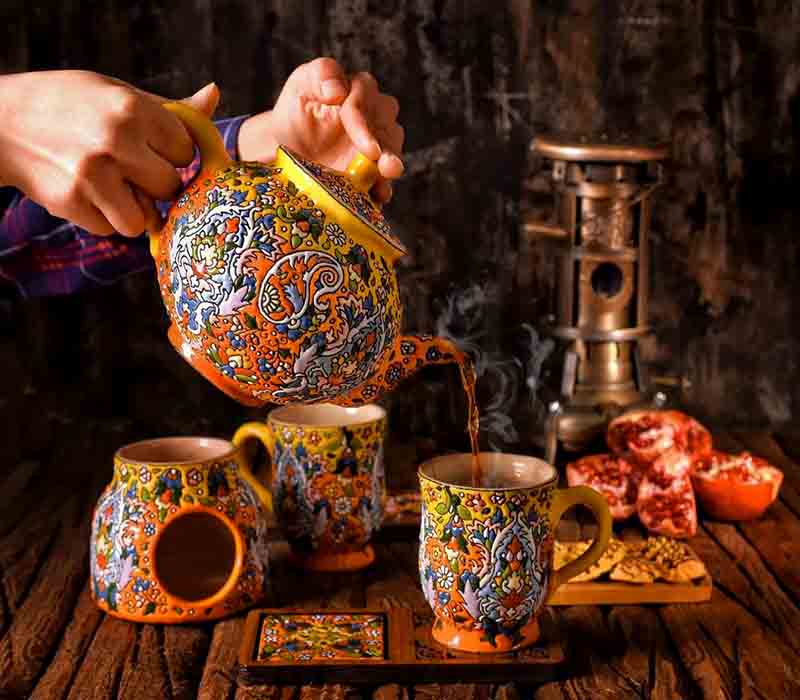
Introduction to Persian Tea History
Tea, known as "Chai" in Persian, has a relatively recent but profound history in Iran. While mentions of tea date back to the 11th century, it wasn't until the late 19th century that tea cultivation began in Iran, transforming it into a cornerstone of daily life and hospitality.
Timeline of Tea in Iran
11th Century
First mention of tea in Persia by scholar Abu Rayhan al-Biruni.
13th Century
Tea introduced via the Silk Road and Mongol caravans.
18th-19th Century
Tea imported through trade routes from India and East Asia, but coffee remains more popular.
Late 19th Century
Prince Mohammad Mirza Kashef al-Saltaneh smuggles tea seeds from India and introduces cultivation in Lahijan, Gilan province.
Early 20th Century
Tea plantations established in northern Iran, leading to domestic production.
Present Day
Iran is one of the world's top tea consumers, with tea deeply embedded in social customs.
The Birth of Iranian Tea Cultivation
Kashef al-Saltaneh, often called the father of Iranian tea, learned tea production techniques in India and secretly brought back 3,000 tea saplings. He planted them in Lahijan, where the climate proved ideal. Today, a tea museum in Lahijan honors his legacy, and Iranian tea production focuses on black tea varieties.
Cultural Significance
In Iranian culture, tea is more than a beverage—it's a symbol of hospitality and social connection. Served in small glass cups, often with sugar cubes or dates, tea accompanies every gathering, from family meals to business meetings. The samovar, introduced from Russia, became a staple in Iranian households.